
The Dove Programme
WELCOME

At ELC, we believe every child is competent, capable, and full of potential.
The Dove Programme exists to make that belief real. It offers a more intensive, more carefully designed experience of learning, for children who need it.
Children in the Dove Programme have significant support needs across one or more areas of development: communication, emotional regulation, sensory processing, or daily living skills.
This may include differences in communication, with children expressing themselves in a variety of ways: spoken language, Augmentative and Alternative Communication (AAC), sign language, gestures, or visual supports. What they share is a right to learning that is genuinely built around them. Responsive, structured, and held by people who know them deeply.
Families are active partners throughout, not visitors to the process. They help set goals, review progress, and keep that consistency alive at home.
Our goal is simple: that every child in the Dove Programme experiences themselves as a capable learner, known and supported by a community that believes in them completely.

April Beresford
Head of Teaching and Learning
The Dove Center
OUR CURRICULUM
The Dove Programme implements the Ontario Curriculum, adapted to meet the needs of a neurodiverse group of children. Teaching is responsive and individualised, with each child supported within their zone of proximal development, ensuring that learning is appropriately scaffolded and targeted toward meaningful progress.
Alongside academic learning, there is a strong emphasis on functional life skills, communication, and social development. The curriculum is designed to ensure that learning is relevant, transferable, and grounded in real-world contexts, supporting children to build independence and confidence in everyday situations.
Intimate, Supportive Group Size
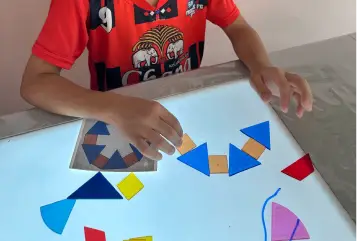
Children aged 3 to 11 benefit from small class sizes, typically ranging from 4 to 6 students depending on individual needs. This allows for a high level of individualised attention, structured support, and flexibility within the learning environment
Our Transdisciplinary Team
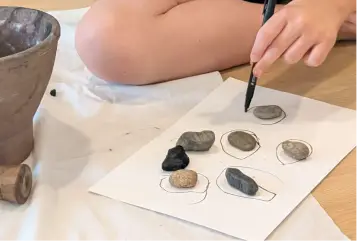
The programme is delivered by a multidisciplinary team of educators, therapists, and disability specialists who work collaboratively using a transdisciplinary approach. This ensures that goals across communication, regulation, motor development, and learning are integrated into daily classroom experiences rather than addressed in isolation.
Evidence-Based Learning
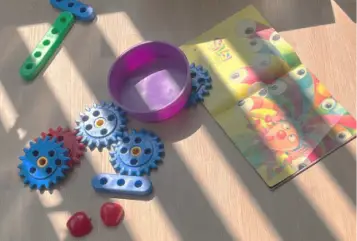
The curriculum draws on evidence-based best practice, incorporating a range of approaches including structured teaching, communication systems, sensory regulation strategies, and play-based inquiry. Learning experiences are carefully designed to balance structure with flexibility, allowing children to access the curriculum in ways that are meaningful, engaging, and appropriately challenging.
OUR LEARNING METHOD
Our highly qualified and dedicated educators within the Dove Programme deliver elements of the mainstream academic curriculum, thoughtfully adapted to meet each child’s individual learning profile. Teaching is responsive and flexible, ensuring that content is presented in ways that align with how each child engages, communicates, and learns best. The programme aims to build confidence, relationships, resilience, and flexible thinking.
Responsive Pedagogy & Individual Profiles
Learning experiences are intentionally designed to be engaging and appropriately stimulating, with careful consideration given to each child’s regulation throughout the day.
A strong focus is placed on the generalisation of skills, with learning extended beyond the classroom into a range of environments.
Learning Beyond the Classroom Walls
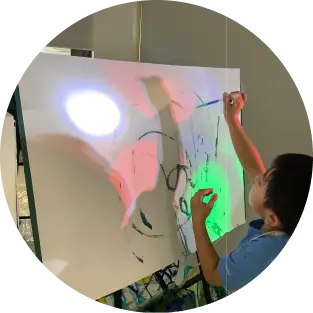
Children regularly engage in experiences across the campus and beyond, including playgrounds, ateliers, cooking, movement based activities, and other therapeutic experiences. These opportunities are used purposefully to support the transfer of skills across settings and contexts.
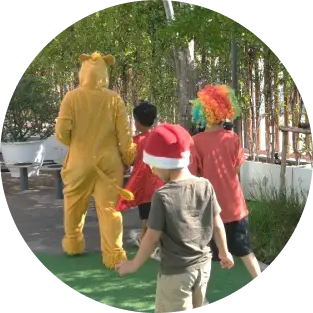
Through a combination of individualised teaching, multidisciplinary expertise, and carefully planned real-world experiences, the Dove Programme provides a structured yet responsive learning environment that supports each child to develop as a capable and engaged learner.
HAVE QUESTIONS ABOUT THE DOVE PROGRAMME?
Every child has their own strengths, interests and learning needs. Speak with our team to learn how The Dove Programme can support your child’s development and potential.
A DAY IN THE DOVE PROGRAMME
Throughout the day, children are supported through the use of visual aids, emotional check in systems, and assistive technology such as AAC to promote the development of self regulation skills while creating a calm, predictable learning environment.
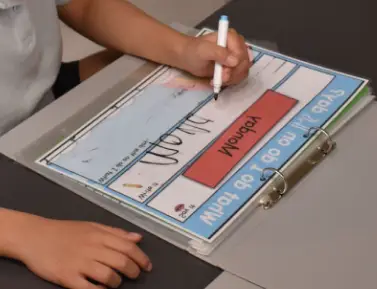
Intimate, Supportive Group Size
Nurturing Regulation, Connection, and Focus
Children attending the Dove Programme follow consistent daily routines within a sensory friendly environment with minimal distractions, allowing them to focus their energy on achieving their individual goals.
They also have regular access to specialised occupational therapy designed learning spaces, including the Active Room and Sensory Room, which are intentionally used to support engagement, regulation, and readiness for learning throughout the day.
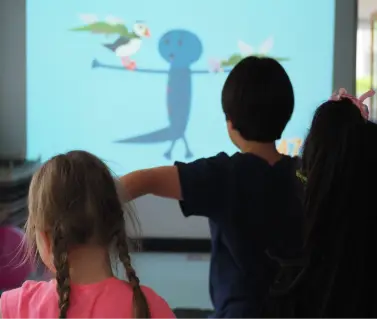
The Language of Materials
Open-Ended Provocations and Wide Horizons
Children engage in expressive, sensory rich learning experiences that invite exploration, creativity, and meaning making. Through open-ended materials and thoughtfully designed provocations, they are supported to communicate their ideas, interests, and emotions while developing fine motor skills. After a nutritious snack, children access outdoor play areas, the Active Room, and explore The City School campus, including a variety of playgrounds and atelier learning spaces.
The Hundred Languages of Children
Morning Gatherings and the Many Languages of Discovery
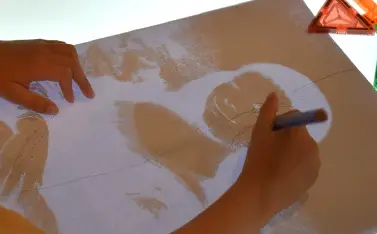
Each morning begins with a vibrant assembly filled with music, interactive storytelling, and movement, after children have greeted their peers and taken care of their personal belongings. This is followed by structured subject-based sessions delivered across the week, including literacy, phonics, mathematics, writing, art, and science. Each session is delivered using a multi-sensory approach, incorporating visual supports, hands on materials, and interactive learning experiences to strengthen understanding, support communication, and deepen comprehension.
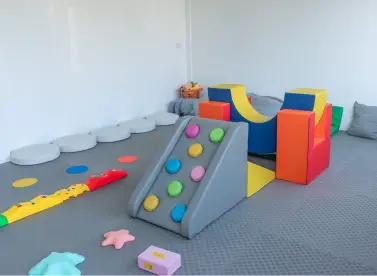
The Active Room is a structured movement space designed to support regulation, coordination, and motor planning through activities such as climbing, balancing, swinging, and heavy work. These environments help maintain motivation and engagement, while also creating natural opportunities for spontaneous interactions with mainstream peers during shared play experiences.
Spaces of Encounter
Interdependent Play and Physical Inquiries
Every other day, children participate in group occupational therapy sessions focused on developing social skills through collaborative games, obstacle courses, and structured challenges. These sessions support teamwork, communication, motor planning, and self regulation, with an emphasis on appropriately stretching each child’s capacity.
The Joy of Inquiry
Constructing Meaning Through Self-Directed Play
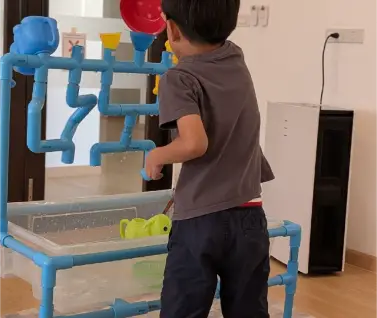
Before lunch, children participate in play based learning experiences designed to build curiosity, persistence, and a positive attitude toward learning. These experiences may include role play, turn taking games, cooking, water play, and engagement with outdoor provocation centres. These spaces are intentionally designed by Project Coordinators and teachers in collaboration, offering open ended materials and invitations for learning through play. They provide meaningful opportunities for children to explore, initiate, and engage with learning materials during free play, supporting curiosity, independence, and deeper engagement.
Living and Learning Together
Practical Wisdom and Shared Rituals
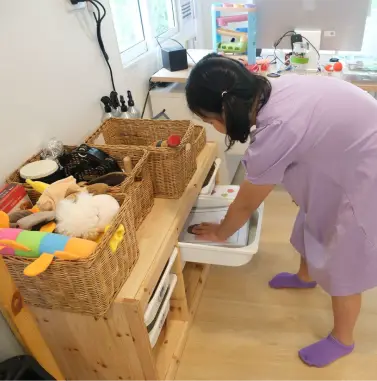
Lunchtime is a communal part of the day, where children practise life skills, communication, independence, and social interaction while enjoying healthy meals together. Life skills are embedded throughout the school day through practical, meaningful learning experiences designed to help children apply their skills in real-world contexts. Children regularly develop literacy, numeracy, communication, and problem solving skills through activities such as cooking and role play shopping experiences, where they count items, use money, gather ingredients, measure, and follow recipes. Daily routines also provide opportunities to practise cleaning, laundry, personal organisation, safety awareness, self care, and hygiene skills, supporting greater independence and confidence across a range of settings.
The afternoon is dedicated to engaging workshops and specialist lessons, which may include Robotics, Water Play, Thai, Library, Project Learning, Physical Education, Music, Speech and Language Therapy groups, and Art Therapy. These experiences are carefully designed to support the development of communication, emotional regulation, body awareness, attention, problem solving, creativity, motor skills, and social participation, while providing opportunities for children to generalise and apply skills across a variety of settings and experiences.
ASSESSMENTS
Assessment within the Dove Programme is ongoing, collaborative, and responsive, ensuring that each child’s learning pathway is individualised and meaningful.
Individualised Support Plan (ISP) Assessments are regularly reviewed and updated to reflect each child’s unique strengths, needs, and developmental priorities. These reviews follow a team-based approach, involving educators, parents, and specialists, to evaluate progress and adjust goals in a way that remains responsive and achievable
The Art of Observation
Embedded Formative Inquiries
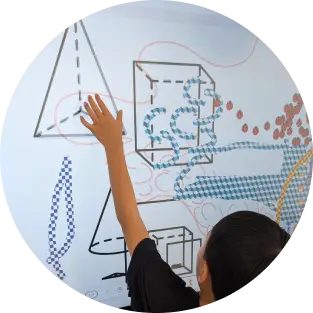
Formative assessment is embedded throughout the day through observation, classwork, and interactive learning experiences, allowing staff to monitor progress in real time and adjust instruction as needed. Approaches are adapted to each child’s communication profile and learning style.
Assessments of learning are conducted at intervals across the year to identify gaps and refine teaching priorities. Curriculum-based assessments, such as Thai money, are repeated over time to provide a more reliable understanding of each student’s progress and ability to apply skills.
Contexts of Capability
Performance, Project, and Potential
Performance based assessment provides opportunities for children to demonstrate their understanding through meaningful, real world experiences such as projects, practical tasks, and collaborative activities. This approach allows for a more accurate representation of each child’s abilities and their capacity to apply learning in context.
Dynamic assessment is used to better understand a child’s learning potential. Through a test, teach, retest approach, educators are able to identify how a child responds to targeted support and adjust instruction accordingly.
The Living Archive
Celebrating Progress, Independence, and Wholeness
Student progress is documented through individual workbooks, where ongoing classwork is collected and reviewed over time. These work samples provide a clear record of each child’s development, allowing staff to monitor progress and identify areas requiring additional support. Where appropriate, comments are added to indicate the level of support provided, ensuring an accurate understanding of each child’s independence, engagement, and skill development.
Behavioural assessment, including Functional Behavioural Assessment (FBA), is used to understand the underlying function of behaviour. This informs the development of targeted strategies that support regulation, engagement, and positive learning outcomes.
If you have any questions about The Dove Programme and ELC’s Student Services and Wellbeing provisions, please contact us